
EXPLORE OUR BLOG
Here you will find a lot of information to better understand performance and health measurements as well as tips about racehorse training and well-being.
LATEST ARTICLES

How the Arioneo Training System powers Ciaron Maher’s training strategy
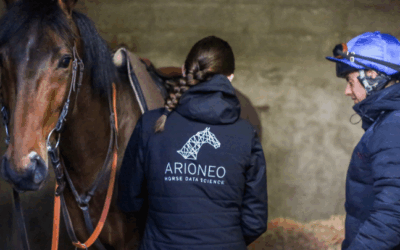
Integrating the Arioneo Equimetre Training System into your stable routine
How to integrate Equimetre into your stable? Installation, data analysis and choosing the right number of sensors for your horses.
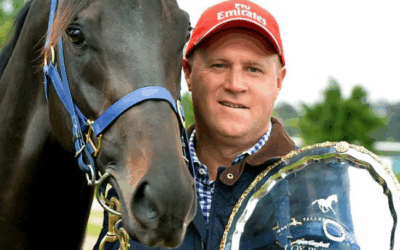
Danny O’Brien: Optimizing performance with the Equimetre Training System
Danny O’Brien, a leading trainer based in Flemington, has been working with performance data in his stable for more than a decade. Like many trainers curious about the potential of new technologies, he has experimented with several monitoring systems over the years. In this interview, he explains why he ultimately chose the Arioneo Training System, Equimetre, and how access to detailed training data now helps his team monitor their horses more precisely, detect potential warning signs earlier, and approach race day with greater confidence.
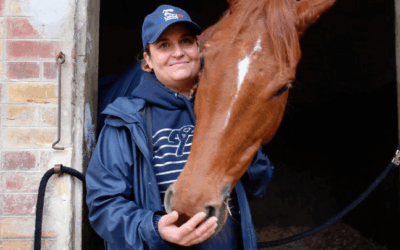
Lucie Pontoir: EQUIMETRE supporting racehorse training
At 34, Lucie Pontoir, a trainer in Maisons-Laffitte, uses EQUIMETRE technology to analyse data and refine training.
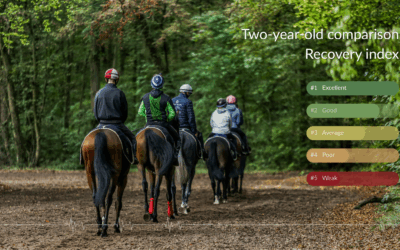
7 reasons to monitor your two-year-olds
Monitoring young horses: analysing progress, recovery, locomotor profile and preventing injuries from the very first canters.
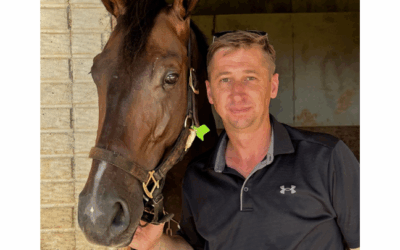
Training with EQUIMETRE: Niall Saville explains how to get the best out of every horse
Based at Laurel Park in Maryland, the racehorse trainer Niall Saville has integrated EQUIMETRE into his daily training routine, using objective data to fine-tune workloads, monitor fitness, and reduce the risk of injury. In this interview, he shares his background, his training philosophy, and how data has changed the way he prepares his horses for the races.
BROWSE AMONG OUR CATEGORIES

Equine Physiology

Testimonials
Racehorse training

Young racehorses
Health & Science
Standardbreds
EQUINE PHYSIOLOGY
Conditioning of the athletic horse
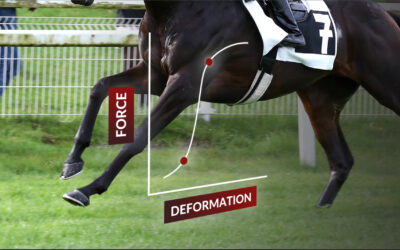
The conditioning of the athletic horse takes place through physiological changes. During training, the body adapts to the loads applied to his various skeletal, muscular and cardiovascular systems.
How do these different systems adapt? What is the purpose of their conditioning?
Conditioning vs training: what are the differences in horses?
Conditioning and training are terms that could be confused. Although both terms lead to an improvement in the horse’s abilities, they do not have the same effects on the horse. This article explains the principle of conditioning and its effects, as well as those of training.
The acid-base balance during exercise
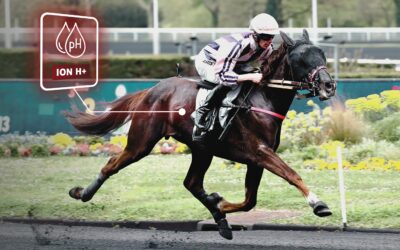
During exercise, the acid-base balance of the horse’s body is perturbed. By using more oxygen and energy, his metabolism produces waste products that acidify his body. The body then naturally regulates its pH level in order to maintain this acid-base balance. How does the horse’s acid-base balance work during exercise?
Exercises of varying intensity: what effect on the horse?
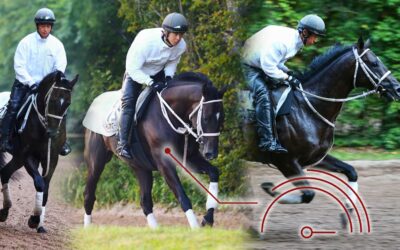
During exercise of varying intensities, the different systems of the horse’s body adapt their functioning. In this article we will look at these changes through the respiratory, cardiovascular and muscular systems.

Racehorse’s three main physiological systems: roles and functions
The horse’s body has three key systems to ensure its proper functioning: the respiratory, cardiovascular and muscular systems.
How do these metabolisms work? What roles do they play in the horse’s body?
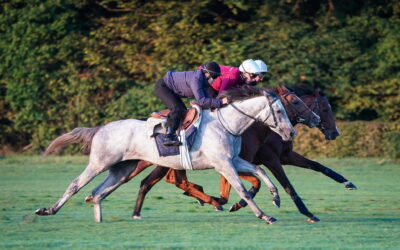
What is the influence of training on a racehorse’s cardiovascular system?
The horse’s cardiovascular system allows good blood circulation and ensures oxygen transport. How does the horse improve it?
RACEHORSE TRAINING MONITORING
Integrating the Arioneo Equimetre Training System into your stable routine
How to integrate Equimetre into your stable? Installation, data analysis and choosing the right number of sensors for your horses.
Danny O’Brien: Optimizing performance with the Equimetre Training System
Danny O’Brien, a leading trainer based in Flemington, has been working with performance data in his stable for more than a decade. Like many trainers curious about the potential of new technologies, he has experimented with several monitoring systems over the years. In this interview, he explains why he ultimately chose the Arioneo Training System, Equimetre, and how access to detailed training data now helps his team monitor their horses more precisely, detect potential warning signs earlier, and approach race day with greater confidence.
Lucie Pontoir: EQUIMETRE supporting racehorse training
At 34, Lucie Pontoir, a trainer in Maisons-Laffitte, uses EQUIMETRE technology to analyse data and refine training.
7 reasons to monitor your two-year-olds
Monitoring young horses: analysing progress, recovery, locomotor profile and preventing injuries from the very first canters.
Training with EQUIMETRE: Niall Saville explains how to get the best out of every horse
Based at Laurel Park in Maryland, the racehorse trainer Niall Saville has integrated EQUIMETRE into his daily training routine, using objective data to fine-tune workloads, monitor fitness, and reduce the risk of injury. In this interview, he shares his background, his training philosophy, and how data has changed the way he prepares his horses for the races.

Optimizing training with data: Rob Archibald’s story
Trainer Rob Archibald, based at Warwick Farm, shares his experience using the EQUIMETRE technology. Alongside his wife Annabelle, Rob explains how data has become a key element in refining their training approach, supporting decision-making, and driving performance.
EQUINE HEALTH & SCIENCE

Arioneo introduces automated ECG screening to tackle racehorse sudden deaths
Arioneo announces the deployment of a new generation of automated ECG-analysis algorithms capable of detecting cardiac rhythm abnormalities, including atrial fibrillation (AFib), across training, racing and resting conditions.
Powered by an artificial intelligence engine trained on one of the largest exercise ECG datasets in the racing industry, this technology enables, for the first time, large-scale cardiac screening in racehorses under real-world conditions.
How to optimise the off-season for a racehorse
Discover how to optimise the racehorse’s off-season with active rest, appropriate nutrition, veterinary monitoring and precise planning to prepare for the next season.

Bridging data & sports with the Advanced Program: Dr Keila Coelho on using data to transform jumping horse care
Following Arioneo’s Advanced programme, Dr Keila Coelho uses data to improve the care and performance of show jumping horses—an inspiring story at the crossroads of sport and science.
YOUNG RACEHORSES MONITORING
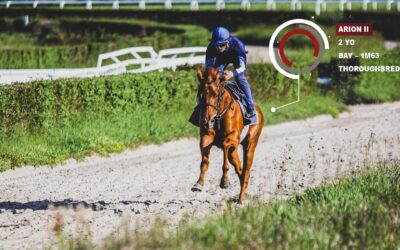
How to follow the training of your two-year-olds?
Every winter, a new generation of racehorses arrives at the stables. How to follow the evolution of these two-year-olds during their first month of training?
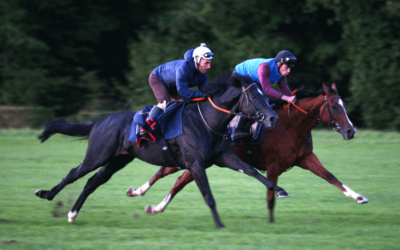
When and how to detect your young horses’ locomotor profile?
Knowing your young horses’ locomotor profile is the first step to detect the future champions… What is their natural acceleration strategy?
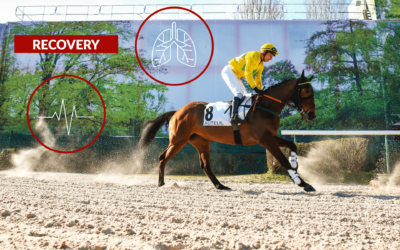
Young racehorses’ recovery
Young horses do not have the same recovery patterns as older horses, even for equal intensity training or between two horses with equivalent fitness. Indeed, young horses have a less efficient heart and must adapt their muscular and neurological systems to the training conditions. They need time to adapt before they can recover properly. The evaluation of recovery in young horses is therefore done differently. How do recovery data differ between young horses and adult horses? How do you assess it?
STANDARDBREDS TRAINING
No Results Found
The page you requested could not be found. Try refining your search, or use the navigation above to locate the post.
TESTIMONIALS
Lucie Pontoir: EQUIMETRE supporting racehorse training
At 34, Lucie Pontoir, a trainer in Maisons-Laffitte, uses EQUIMETRE technology to analyse data and refine training.
Training with EQUIMETRE: Niall Saville explains how to get the best out of every horse
Based at Laurel Park in Maryland, the racehorse trainer Niall Saville has integrated EQUIMETRE into his daily training routine, using objective data to fine-tune workloads, monitor fitness, and reduce the risk of injury. In this interview, he shares his background, his training philosophy, and how data has changed the way he prepares his horses for the races.
Optimizing training with data: Rob Archibald’s story
Trainer Rob Archibald, based at Warwick Farm, shares his experience using the EQUIMETRE technology. Alongside his wife Annabelle, Rob explains how data has become a key element in refining their training approach, supporting decision-making, and driving performance.