
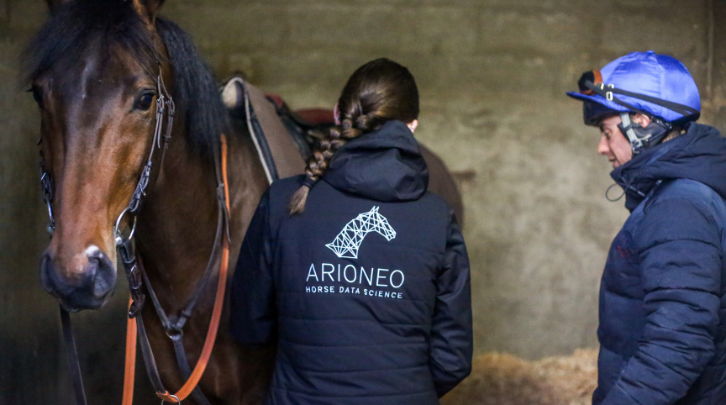
Training racehorses requires a delicate balance of experience, observation and daily adaptation.
Every horse reacts differently. Every session provides valuable insights. Every decision has an impact.
With multiple horses to manage and limited time, it is a constant challenge to maintain the same level of precision across an entire roster, even for the most organised stables. This is where a structured database comes in: it doesn’t replace the trainer’s expertise, but provides a way to confirm, refine and share information.
1. From a tool to a comprehensive training system
Many trainers start out with just one or two sensors. In this setup, Arioneo Training is used sporadically, for the following purposes:
- To analyse a specific session,
- To clear up a doubt,
- To monitor one particular horse.
While this already adds value, it does not yet exploit the system’s full potential. The Arioneo Equimetre Training System is designed to be integrated into the daily routine, providing long-term support for decision-making. Data doesn’t replace intuition; it allows it to be organised and reinforced.
2. Simple integration into the routine
The system fits into existing practices without adding complexity to the organisation.
We use EQUIMETRE for every breeze. Some horses breeze weekly, others every two weeks, but they always wear it for those workouts.
It’s the first thing we look at. We’re so used to having it now that it’s become part of our routine. If we want to dive deeper into something later, we can review the data in more detail. But as soon as a horse finishes breezing, I check the data to see how he went.
Niall Saville, trainer at Laurel Park, United States
Before training, the horses are equipped based on the objectives of the day, whether that involves monitoring physical condition, evaluating progress or tracking recovery.
During the session, data is collected automatically, without interfering with the horse’s work or the team’s workflow.
After training, reports are automatically generated and sent via WhatsApp, the mobile app and the Equimetre platform. These reports enable a quick analysis of cardiovascular response, speed, effort distribution, as well as locomotor parameters.
These insights validate whether the session matched the initial objective, help to understand how the horse responded to the effort and establish whether an adjustment is necessary.
The process itself remains simple; it is the quality and consistency of the feedback that makes the difference.
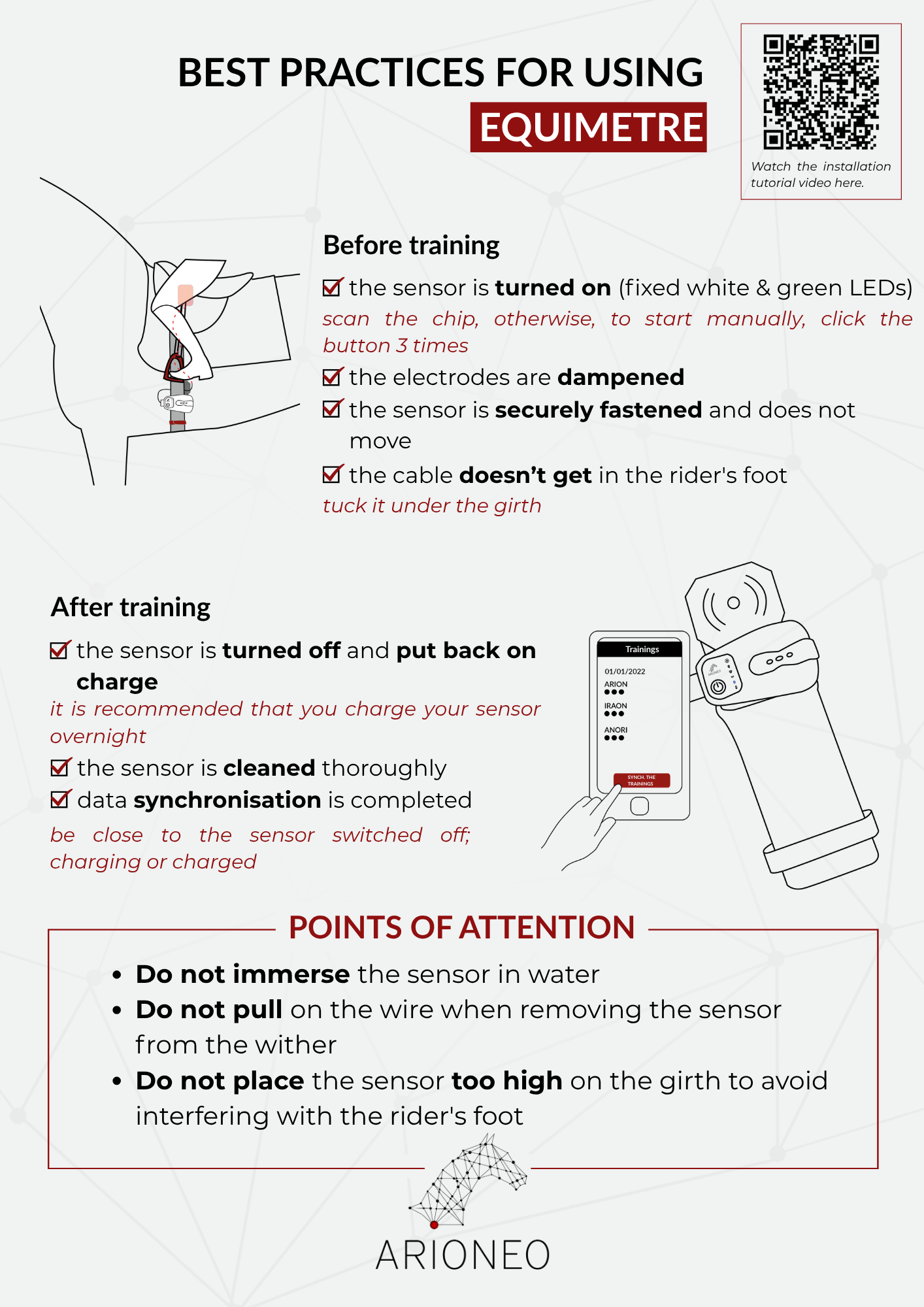
Download our poster on best practices for using the Arioneo Equimetre Training System to display in your stables.
3. Specific applications for every situation
The value of the system is measured in very concrete scenarios.
For two-year-old horses, it helps identify profiles earlier and distinguish between sprinters, milers or stayers. This allows training to be tailored more quickly and helps to avoid mistakes when entering races. Early integration also allows for comparing two-year-olds data against the stable’s historical benchmarks.
————————————————————– Read our article on monitoring 2-year-olds ——————————————————————–
For horses in training, it allows for fine-tuning the workload, adjusting intensity precisely, and ensuring steady progression while anticipating potential injuries.
During the recovery phase, it becomes possible to assess actual recovery, detect abnormal responses and adjust recovery times with greater precision.
In all cases, the objective remains the same: to support experience with measurable data.
Beyond the gallops: leveraging intermediate training
In many stables, monitoring focuses mainly on gallops. However, a significant part of physiological adaptation is built during aerobic work. These sessions develop the cardiovascular base, improve recovery, and prepare for intensive efforts.
With Equimetre, these sessions become measurable. You can evaluate the actual effort level, analyze cardiac drift, and measure recovery capacity.
This allows for better calibration of intensities, individualising workloads, and building a more consistent progression.
Performance isn’t just won during fast work; it’s built through the quality of daily work.
4. The key point: moving from individual tracking to a stable-wide vision
Using one sensor provides information. Using multiple sensors transforms the way you make decisions.
With a limited number of sensors, monitoring naturally focuses on a few horses and certain information simply cannot be collected and used to inform decisions.
Conversely, wider deployment enables you to compare horses within the same session, identify individual profiles more accurately, spot early warning signs of injury or loss of form, and distribute workloads more effectively.
One sensor provides information. Several give you a vision. At this stage, the Arioneo Training System becomes a comprehensive monitoring tool for horses and lots.

Example of a comparison table generated automatically in Equimetre reports.
5. Dedicated Support to Structure Your Decisions
Beyond the sensors, Arioneo also relies on human expertise: our Performance Analysts support trainers every day. Their role is to interpret data within the specific context of each stable, identify truly relevant signals, and assist with daily decision-making.
You don’t just receive data. You benefit from an expert, structured perspective, allowing you to integrate data faster and more effectively into your routine.
6. A lasting impact on performance
Over time, integrating data into the routine leads to more consistent decisions, reduces errors in judgment, and improves the alignment between intention and result. Performance is built on the repetition of the right decisions. Better-informed decisions, applied consistently, create a sustainable advantage.
We’ve been working with data for the past couple of years, and it has become an increasingly important part of what we do. […] We’ve found it fascinating to uncover insights about horses that might not be visible to the naked eye. Data provides an additional layer to our training capabilities, helping us refine our approach and make more informed decisions.
Tom Charlton, trainer in collaboration with John O’Shea in Sydney, Australia
7. What level of coverage for your stable?
The goal isn’t necessarily to equip every horse at all times, but to reach a level of coverage sufficient for a reliable overview.
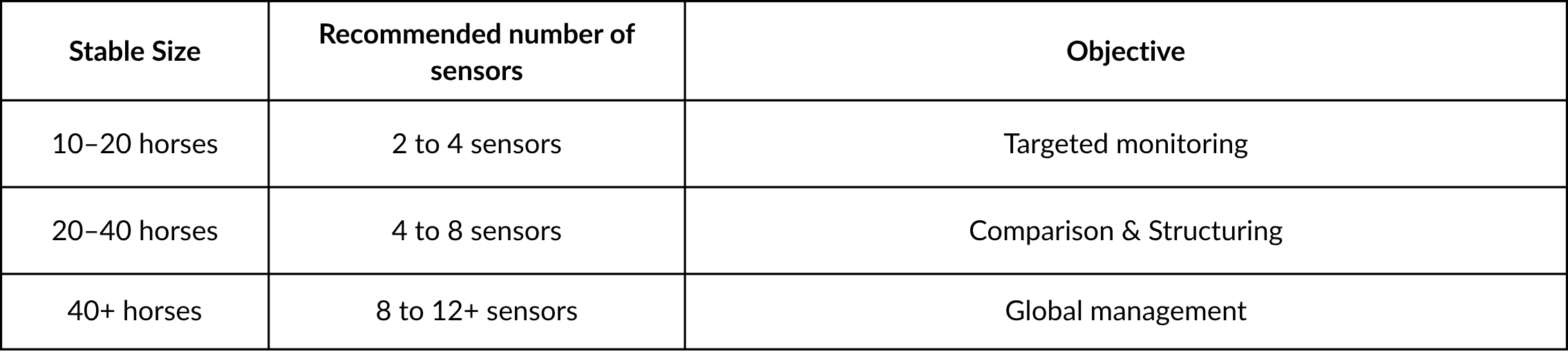
Sensors can be rotated based on the day’s priorities. The challenge isn’t measuring everything, but measuring enough to make the right calls.
8. Addressing common concerns
“I don’t have time”
Reports are automatic and designed for quick reading.
“I already know my horses”
The system confirms, refines, and adds an extra layer of precision..
“It’s complex”
Data is translated into simple, actionable indicators.
9. A change in approach
The best stables don’t necessarily work harder; they operate with more structure and clarity. Integrating the Arioneo Equimetre Training System doesn’t change the way you train, it strengthens the way you decide.
How many horses are you truly tracking today?
Si vous utilisez déjà Equimetre, l’enjeu n’est pas d’avoir plus de données, mais d’avoir une vision plus complète.
Evaluate your current setup and identify how a wider deployment can improve your daily decision-making.
Need some advice?
Keywords: sensor, Equimetre Training System, Arioneo, racehorse, training, data, analysis, performance, heart rate monitoring, stable, prevention, recovery